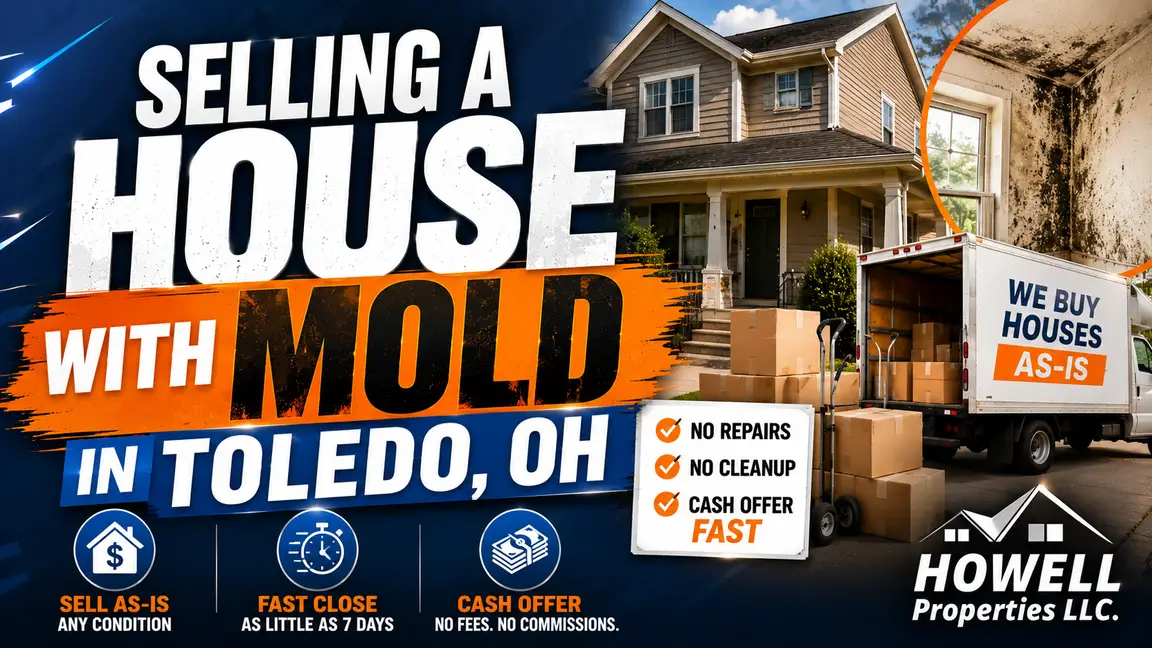
A Complete Guide for Toledo Homeowners Dealing With Mold Problems Before Selling
Discovering mold in your home can feel overwhelming.
Whether it’s a small patch in the basement or widespread mold caused by water damage, many homeowners immediately wonder if they can still sell their property—or if they’ll have to spend thousands of dollars on remediation first.
The good news is that mold doesn’t automatically prevent you from selling your home.
Many homeowners throughout Toledo, OH successfully sell properties with mold every year. The key is understanding your options, your legal responsibilities, and which selling approach makes the most financial sense for your situation.
If you’re facing mold issues, this guide will help you make an informed decision before investing money into repairs.
Why Mold Can Become a Major Problem
Mold is often a symptom of another issue rather than the problem itself.
Common causes include:
- Roof leaks
- Basement moisture
- Plumbing leaks
- Flood damage
- Poor ventilation
- High humidity
- Foundation cracks
- Condensation around windows
Left untreated, mold can spread quickly and damage drywall, insulation, flooring, wood framing, and personal belongings.
Depending on the extent of the damage, professional remediation can cost thousands—or even tens of thousands—of dollars.
For many homeowners, those costs simply aren’t realistic.
Can You Sell a House With Mold in Ohio?
Yes.
Ohio homeowners can legally sell a house with mold.
However, state law generally requires sellers to disclose known material defects, including known mold issues, through the Residential Property Disclosure Form.
Disclosure doesn’t necessarily mean you must fix the problem.
Many buyers—including local cash home buyers and real estate investors—purchase homes with mold because they’re prepared to handle the remediation themselves.
Do You Have to Remove Mold Before Selling?
Not always.
Whether remediation makes sense depends on:
- The severity of the mold
- Your budget
- Your timeline
- The type of buyer you’re targeting
If you’re selling through the traditional real estate market, buyers may request mold remediation before closing.
If you’re selling directly to a local cash buyer, many purchase homes exactly as they are—including properties with mold.
Understanding your options before spending money on repairs can help you avoid unnecessary expenses.
Signs It May Be Better to Sell Instead of Repair
Selling may be the better choice if:
- Mold remediation costs exceed your budget.
- Water damage has affected multiple areas of the home.
- You’re already planning to move.
- The house needs several major repairs in addition to mold.
- Insurance won’t cover remediation.
- The property has been vacant for an extended period.
- You’re dealing with an inherited home or rental property.
- The cost of repairs outweighs the home’s value.
Every homeowner’s situation is different, but you don’t have to feel trapped by expensive repairs.
Your Options for Selling a House With Mold
Option 1: Pay for Mold Remediation Before Selling
Pros
- Appeals to more traditional buyers
- May increase marketability
- Can help during inspections
Cons
- High upfront costs
- Repairs may uncover additional problems
- Longer timeline before listing
- No guarantee you’ll recover the repair costs
Option 2: List the House As-Is With a Real Estate Agent
Pros
- No obligation to fully renovate
- Larger pool of potential buyers
Cons
- Buyers may negotiate after inspections
- Mold can discourage financed buyers
- Repair requests may delay closing
- Agent commissions and closing costs still apply
Many traditional buyers become hesitant when mold appears in an inspection report.
Option 3: Sell As-Is to a Local Cash Buyer
Many homeowners choose this option to avoid costly remediation.
Pros
✔ No mold remediation required
✔ No repairs
✔ No cleaning
✔ No real estate commissions
✔ Flexible closing timeline
✔ Close in as little as 7 to 21 days
Cons
- Offer reflects the property’s current condition
For homeowners who want certainty, selling as-is can eliminate the stress of preparing the property for the market.
Why Waiting Can Cost More
Mold rarely improves on its own.
Over time, it can spread into:
- Walls
- Flooring
- Ceilings
- Insulation
- HVAC systems
Meanwhile, you’ll likely continue paying for:
- Property taxes
- Insurance
- Utilities
- Mortgage payments
- Ongoing maintenance
Addressing your selling options early may help prevent additional damage and expenses.
What If Your House Has Other Problems Too?
Homes with mold often have other issues, including:
- Roof damage
- Water intrusion
- Foundation cracks
- Plumbing leaks
- Code violations
- Delinquent property taxes
- Deferred maintenance
The good news is these challenges don’t necessarily prevent you from selling.
Many homeowners sell properties with multiple issues without completing major repairs.
Why Many Toledo Homeowners Choose Cash Buyers
For homeowners facing mold problems, simplicity often matters more than maximizing the sale price.
Selling directly to a local cash buyer offers:
✔ No mold remediation
✔ No repairs
✔ No cleaning
✔ No agent commissions
✔ No financing delays
✔ Flexible closing dates
✔ Predictable closing process
Instead of worrying about inspections and repair negotiations, you can focus on moving forward.
Common Situations We Help With
At Howell Properties LLC, we regularly help homeowners dealing with:
- Mold damage
- Water damage
- Fire damage
- Vacant homes
- Inherited properties
- Major repairs
- Divorce
- Job relocation
- Rental properties
- Financial hardship
Every homeowner’s circumstances are unique, and we’ll help you understand the options available for your property.
How the Process Works With Howell Properties LLC
Step 1
Tell us about your property and the mold issues you’re facing.
Step 2
We’ll review the home’s condition and answer your questions.
Step 3
Receive a fair, no-obligation cash offer.
Step 4
Choose a closing timeline that works best for you.
Step 5
Close through a local title company and receive your funds.
No mold remediation.
No repairs.
No commissions.
People Also Ask
Can I sell my house with mold in Ohio?
Yes. You can legally sell a home with mold as long as you disclose known issues as required by Ohio law.
Do I have to remove mold before selling?
Not necessarily. Many homeowners sell properties as-is without completing mold remediation.
Will mold affect my home’s value?
It can. The impact depends on the severity of the mold, the underlying cause, and the type of buyer.
Can cash buyers purchase homes with mold?
Yes. Many cash home buyers regularly purchase properties with mold or water damage.
How quickly can I sell a house with mold?
Many cash sales close within 7 to 21 days, depending on title work and your preferred closing schedule.
Related Resources
➡️ How to Sell a House That Needs Major Repairs in Toledo, OH
➡️ No Repairs, No Fees: Selling Your Toledo, OH House As-Is
➡️ What to Do When You Can’t Afford Home Repairs in Toledo, OH
Frequently Asked Questions
Q: Will I need to disclose mold when selling my home?
A: Yes. Ohio sellers are generally required to disclose known material defects, including known mold issues.
Q: Can I sell my home without paying for mold remediation?
A: Yes. Many homeowners choose to sell their homes as-is instead of paying for expensive remediation.
Q: Will I pay commissions when selling directly?
A: No. Howell Properties LLC purchases homes directly, so there are no real estate commissions.
Q: What if my house has mold and other major repairs?
A: Homes with multiple issues—including mold, water damage, and deferred maintenance—can still be sold as-is.
You Don’t Have to Let Mold Delay Your Next Move
Mold damage can be stressful, but it doesn’t mean you’re out of options.
Whether you decide to complete remediation, list your home traditionally, or sell it as-is, understanding your choices will help you make the best decision for your situation.
If you’d like to explore your options without pressure, we’re here to help.
📞 Call us now at (419) 273-7355
💻 Or get started online at howellpropertiesllc.com
No repairs. No cleaning. No commissions. Simple process.