What Toledo Homeowners Need to Know About Vacant Properties, City Requirements, Repairs, and Selling As-Is
If you own a vacant house in Toledo, you may already know that an empty property can become a bigger responsibility than you expected.
Maybe the house belonged to a family member.
Maybe you moved away and haven’t been back.
Maybe a former rental property stopped making sense.
Or perhaps the house needs so much work that you’ve been putting off dealing with it.
Then there’s the question that usually comes next:
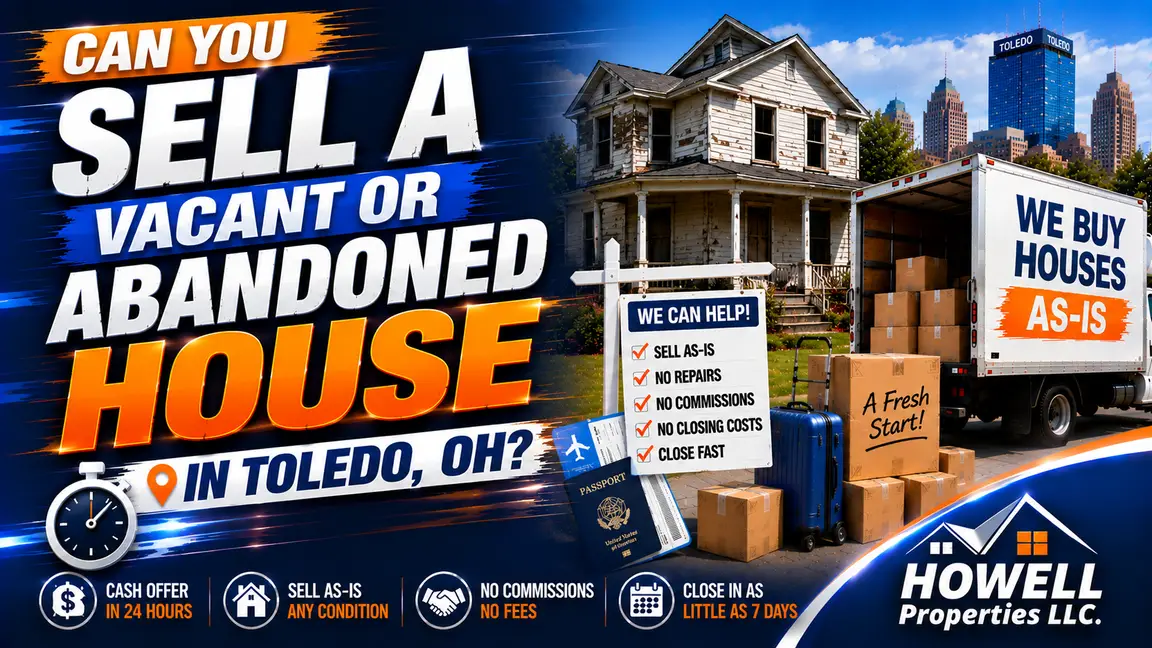
Can you actually sell a vacant or abandoned house in Toledo without fixing everything first?
In many situations, yes.
But there’s an important difference between a property simply being vacant and one that has become abandoned, unsafe, or subject to code enforcement.
Understanding that difference—and understanding your responsibilities as the owner—can help you decide what to do next.
What Is a Vacant House?
A vacant house is generally a residential property where nobody is lawfully living there on a permanent basis.
The City of Toledo specifically states that a residential property is considered vacant when no one is lawfully living there permanently. The City also says that simply having utilities turned on, doing work on the property, or planning to rent it does not necessarily mean the property is considered occupied.
This can include:
- An inherited house
- A rental between tenants
- A property you’re renovating
- A house you moved out of
- A property you’re preparing to sell
- A house damaged by fire or water
- A property that has been sitting empty for months or years
Vacant doesn’t necessarily mean abandoned.
That’s an important distinction.
What Makes a House “Abandoned”?
“Abandoned” generally suggests more than simply nobody living in the property.
A house may show signs of abandonment or serious deterioration when there are problems such as:
- Broken windows
- Unsecured doors
- Accumulated trash or debris
- Significant property deterioration
- Vandalism
- Lack of maintenance
- Unsafe structural conditions
Ohio law also identifies circumstances that can be relevant when determining whether a property is vacant and abandoned, including conditions such as boarded or broken windows, damaged doors, accumulated debris, vandalism, deterioration, and the absence of an owner or tenant residing at the property.
The practical takeaway is simple:
A vacant house still needs an owner to take responsibility for it.
Can You Sell a Vacant House in Toledo?
Yes.
Being vacant does not automatically prevent you from selling the property.
In fact, selling may be worth considering if you’re tired of paying for a property you aren’t using.
You can potentially:
- Renovate it and sell traditionally
- List it as-is
- Sell directly to a cash buyer
The best option depends on the property’s condition, your financial situation, and how much time and money you want to put into it.
Does Toledo Require You to Register a Vacant House?
Yes, for covered residential properties.
The City of Toledo currently requires vacant residential properties to be registered within 30 days of becoming vacant. The registration must be updated annually by January 31, and the current registration fee is $100.
The requirement applies to residential properties including:
- Single-family homes
- Duplexes
- Residential buildings with one to four units
The City’s current information also provides possible fee waivers for certain situations, including properties that are:
- Actively listed for sale
- Actively marketed for rent
- Under renovation
- Under construction with a valid permit
- In probate
- In foreclosure
- Subject to a signed purchase offer
- Being transferred to the Lucas County Land Bank
A waiver can reduce the registration fee to $50 when the qualifying conditions and documentation requirements are met.
If you own a vacant Toledo property, don’t assume that putting it up for sale automatically means you don’t have registration responsibilities. Review the current City requirements and any applicable waiver.
What Happens If You Don’t Register?
This is another reason not to ignore a vacant property.
The City of Toledo states that failure to register a vacant residential property can lead to enforcement under Chapter 1767 of the Toledo Municipal Code, including civil fines, notices of liability, and in some cases criminal charges.
Registration also doesn’t mean the property is now exempt from other rules.
The City specifically states that vacant-property registration does not exempt a property from building, housing, health, or zoning requirements.
In other words:
Registering the house is only one part of being responsible for it.
Do You Still Have to Maintain a Vacant House?
Yes.
This is one of the biggest misconceptions about vacant properties.
Nobody living there doesn’t mean nobody is responsible for the property.
Toledo states that buildings must be maintained whether they are occupied or not. The City’s code-compliance guidance includes securing doors and windows, removing visible junk and debris, and keeping the structure from becoming dangerous. Unsafe buildings can be subject to condemnation and demolition.
Other property-maintenance concerns can include:
- Tall grass
- Debris
- Damaged roofs
- Broken windows
- Deteriorated siding
- Damaged masonry
- Unsafe porches
- Plumbing problems
- Electrical problems
- Water damage
Toledo’s current code-violation guidance specifically identifies deteriorating roofs, damaged windows and doors, accumulated debris, damaged floors, water damage, and defective plumbing or electrical conditions among common property concerns.
Why Keeping a Vacant House Can Become Expensive
An empty property can quietly drain money.
You may still be paying:
Property Taxes
Taxes continue whether someone lives in the house or not.
Insurance
You may need appropriate coverage for a vacant property, depending on your policy.
Utilities
Electric, water, gas, or other services may still be needed depending on the property and season.
Maintenance
Someone still needs to mow the grass, check the property, address leaks, and keep the exterior maintained.
Security
Vacant houses can become targets for vandalism, theft, or unauthorized entry.
Repairs
A small problem can become a much larger problem when nobody is living there to catch it early.
For example:
A minor roof leak can become major water damage.
A broken window can become an unsecured entry point.
A frozen pipe can cause significant water damage.
A neglected yard can result in code concerns.
What If the House Has Been Vacant for Years?
This is where the situation can become more complicated.
A long-vacant property may have accumulated:
- Deferred maintenance
- Property tax debt
- Liens
- Code violations
- Water damage
- Structural problems
- Vandalism
- Unwanted belongings
At that point, the question isn’t simply:
“How much is this house worth?”
You also need to ask:
“How much will it cost me to keep it?”
And:
“How much would it cost to make it market-ready?”
Those numbers can help you determine whether holding, renovating, or selling makes the most sense.
Do You Have to Renovate a Vacant House Before Selling?
No, not necessarily.
A vacant house can be sold in its current condition.
That means you don’t automatically have to:
- Replace the roof
- Remodel the kitchen
- Replace the flooring
- Paint every room
- Repair every cosmetic issue
- Make the house move-in ready
You can explore an as-is sale instead.
However, selling as-is doesn’t eliminate applicable disclosure requirements or other legal obligations.
The condition of the property still matters, and known material issues may need to be disclosed depending on the transaction.
What If the House Is Full of Belongings?
This is common with inherited and abandoned properties.
You may have furniture, appliances, boxes, clothing, old paperwork, or other personal belongings throughout the house.
If you’re selling traditionally, you may need to prepare the property for buyers.
Depending on the buyer and the terms of the agreement, a direct sale may offer more flexibility regarding what remains in the property.
But don’t assume you can simply leave everything behind without discussing it.
Make sure the purchase agreement clearly addresses the condition of the property and any personal property or contents that will remain.
What If the Vacant House Has Code Violations?
Code violations don’t necessarily mean you can’t sell.
But you shouldn’t ignore them.
Toledo’s code-compliance system allows the City to issue notices and take action when property owners fail to address certain violations. In some circumstances, if the owner doesn’t correct a violation, the City may perform the work and place the associated charge on the property owner’s tax bill as a nuisance-abatement assessment.
That can turn a maintenance problem into another financial obligation attached to the property.
If you’ve received a code violation notice, find out:
- What the violation is
- What deadline applies
- Whether an appeal is available
- What it will cost to correct
- Whether selling the property is a better option
Don’t assume selling automatically eliminates an existing violation.
Have the specific situation reviewed as part of the transaction.
What If the House Is Considered Unsafe?
This is more serious.
The City of Toledo states that buildings deemed unsafe can be subject to condemnation and demolition.
Toledo also operates a demolition program for vacant, blighted, and abandoned properties.
If you’ve received a demolition notice or believe the property may be considered unsafe, don’t treat it like a normal home sale.
Find out exactly what the notice says and what deadlines apply.
If necessary, speak with a qualified attorney or the appropriate City department about the property’s status.
Your 3 Main Options for a Vacant Toledo House
Option 1: Renovate and Sell Traditionally
You can invest in the property, bring it into better condition, and list it on the traditional market.
This may make sense if:
- The property has strong potential
- Repairs are manageable
- You have available funds
- You have time
- The expected increase in value justifies the investment
The downside:
You take on the repair project, holding costs, and uncertainty.
Option 2: List the Vacant House As-Is
You can also sell the property through the traditional market without completing major renovations.
Potential advantages:
- Less upfront renovation
- Traditional market exposure
- Opportunity to find buyers looking for a project
Potential disadvantages:
- Showings
- Inspections
- Buyer negotiations
- Repair requests
- Financing issues
- Potentially longer time on market
- Agent commissions and other selling expenses
Option 3: Sell Directly to a Cash Buyer
A direct cash sale can be an option when you’re primarily looking for a simpler exit.
This may be especially relevant when the house:
- Needs major repairs
- Has been vacant for a long time
- Has unwanted belongings
- Has code concerns
- Has back taxes
- Is costing you money every month
A cash buyer may evaluate the property in its current condition rather than requiring you to renovate first.
The trade-off
A cash offer will reflect the property’s condition.
The buyer has to account for:
- Repairs
- Holding costs
- Risk
- Cleanup
- Resale
- Other investment expenses
So don’t compare a cash offer to the price of a fully renovated property.
Compare your actual expected net proceeds.
What If the Vacant House Has Back Taxes or Liens?
Vacant properties sometimes accumulate financial problems while they’re sitting unused.
You may have:
- Delinquent property taxes
- A mortgage
- Contractor liens
- Judgment liens
- Utility-related charges
- Other recorded obligations
These don’t automatically mean the property cannot be sold.
But they need to be identified and addressed during the closing process.
Before deciding what to do, determine:
What is the property worth?
What do I owe?
What would it cost to repair?
How much am I spending every month to keep it?
Those numbers give you a much clearer picture.
What If You Inherited the Vacant House?
Inherited properties are one of the most common reasons houses become vacant.
You may suddenly be responsible for a Toledo house you didn’t plan to own.
The property may have:
- Years of deferred maintenance
- Unpaid taxes
- Personal belongings
- Multiple heirs
- An outdated mortgage
- Code issues
If the property is part of an estate, make sure the person selling has the authority to sell it.
If probate is involved, an Ohio probate attorney can explain the estate’s requirements.
Interestingly, Toledo’s current vacant-property program specifically lists probate proceedings as one situation that may qualify for a registration fee waiver, provided the required documentation is submitted.
What If You Live Outside Toledo?
This can make an already difficult property even harder to manage.
Maybe you inherited the house but now live in another state.
Or you moved away years ago.
You may be paying someone to:
- Mow the lawn
- Check the property
- Handle repairs
- Remove debris
- Monitor the house
Toledo’s current vacant-property registration information states that owners who don’t live locally must designate a local agent who lives or has an office in Lucas County or an adjacent county and can receive notices on the owner’s behalf.
If you’re an out-of-town owner, the cost and inconvenience of maintaining the property can become a major factor in deciding whether to keep or sell it.
How to Decide Whether to Keep or Sell the Vacant House
Before making the decision, compare these five things:
1. Current Property Value
What could the house reasonably be worth today?
2. Repair Cost
How much would it take to make it market-ready?
3. Monthly Holding Cost
How much are taxes, insurance, utilities, maintenance, and other expenses costing you?
4. Potential Future Value
Would keeping it for another year realistically create enough additional value to justify the cost?
5. Your Personal Situation
Do you actually want to continue owning and managing the property?
That last question matters.
A property can have financial value and still be a poor fit for your life.
How the Process Works With Howell Properties LLC
If you’re considering selling your vacant Toledo property as-is, the process can be straightforward.
Step 1: Tell Us About the Property
Give us the address and explain the situation.
Tell us if it’s:
- Vacant
- Damaged
- Full of belongings
- Behind on taxes
- In need of repairs
- Subject to code concerns
Step 2: We Review the Property
We’ll look at the condition and circumstances surrounding the property.
Step 3: Receive a No-Obligation Offer
You’ll receive a straightforward offer based on the property’s current condition.
Step 4: Title and Property Issues Are Reviewed
If you decide to move forward, the appropriate title and closing professionals can identify the issues that need to be addressed.
Step 5: Close According to the Agreed Timeline
Once the necessary requirements are satisfied, the transaction can move toward closing according to the agreed terms.
The actual timeline depends on the property, title, tax situation, and other circumstances.
People Also Ask
Can I sell a vacant house in Toledo, OH?
Yes. A vacant property can potentially be sold through a traditional listing, an as-is listing, or a direct sale.
Can I sell an abandoned house as-is?
Potentially, yes. However, the property’s legal status, condition, code violations, liens, and other issues need to be addressed.
Does Toledo require vacant homes to be registered?
Yes. Toledo currently requires covered vacant residential properties to be registered within 30 days of becoming vacant, with annual renewal requirements.
Can I sell a vacant house with code violations?
Potentially. Code violations should be disclosed and addressed as part of the transaction, and the specific violation may affect the sale.
Can I sell a vacant house with back taxes?
Potentially. Delinquent taxes don’t automatically prevent a sale, but the tax obligations and any foreclosure or title issues need to be resolved appropriately.
Do I have to clean out a vacant house before selling?
Not necessarily. The answer depends on the buyer and the purchase agreement. If belongings will remain, make sure the agreement clearly addresses them.
Can I sell a vacant house that needs major repairs?
Yes. You can explore an as-is sale rather than spending money renovating the property first.
Frequently Asked Questions
How long can a house remain vacant in Toledo?
There isn’t a simple rule saying you must sell a house after a certain number of days. However, Toledo requires covered vacant residential properties to be registered within 30 days of becoming vacant, and owners remain responsible for maintenance and compliance.
Does registering my vacant house mean I’m protected from code enforcement?
No. Toledo specifically states that vacant-property registration does not exempt a property from building, housing, health, or zoning requirements.
What if I can’t afford to maintain my vacant house?
Compare the cost of continuing to own it with the property’s current value and your selling options. An as-is sale may allow you to exit the property without funding a major renovation.
Can I sell a vacant house before registering it?
Don’t assume that listing or selling the property eliminates your registration responsibilities. Toledo’s current program requires covered vacant residential properties to be registered within 30 days of vacancy, while certain circumstances—including being actively listed for sale—may qualify for a fee waiver.
What if the City has already sent me a notice?
Read the notice carefully and determine what action and deadline it specifies. If you believe the notice is incorrect, Toledo provides an appeal process for certain code-violation notices.
Key Takeaways
- Yes, you can potentially sell a vacant or abandoned house in Toledo.
- Vacant does not necessarily mean abandoned.
- Toledo currently requires covered vacant residential properties to be registered within 30 days of becoming vacant.
- Registration does not eliminate your responsibility to maintain the property.
- Serious deterioration or unsafe conditions can lead to code enforcement and, in some cases, condemnation or demolition.
- You don’t automatically have to renovate a vacant property before selling.
- Compare the cost of holding the property against your potential net proceeds from selling.
- If the property has taxes, liens, probate issues, or code violations, understand those issues before choosing a selling strategy.
Ready to Move On From Your Vacant Toledo House?
A vacant house can become expensive without you realizing how much it’s costing you.
The taxes continue.
The maintenance continues.
The risk continues.
And if the property needs major repairs, the cost of getting it back into shape can be difficult to justify.
You don’t have to decide immediately whether selling is right for you.
Start by understanding what the property is worth, what it needs, what you owe, and what it’s costing you to keep it.
If an as-is sale makes sense, Howell Properties can help you explore that option without requiring you to renovate the property first.
📞 Call us now at (419) 273-7355
💻 Or get started online at howellpropertiesllc.com
No repairs. No cleaning. No commissions. Simple process.